
 โดย
โดย 
If you’re living in Chiang Mai or planning to rent or buy a home here, air quality during smoke season (February–April) is something you need to plan for.
PM2.5 levels often reach unhealthy — and sometimes hazardous — levels. That means indoor air quality becomes just as important as location, price, or layout when choosing a home.
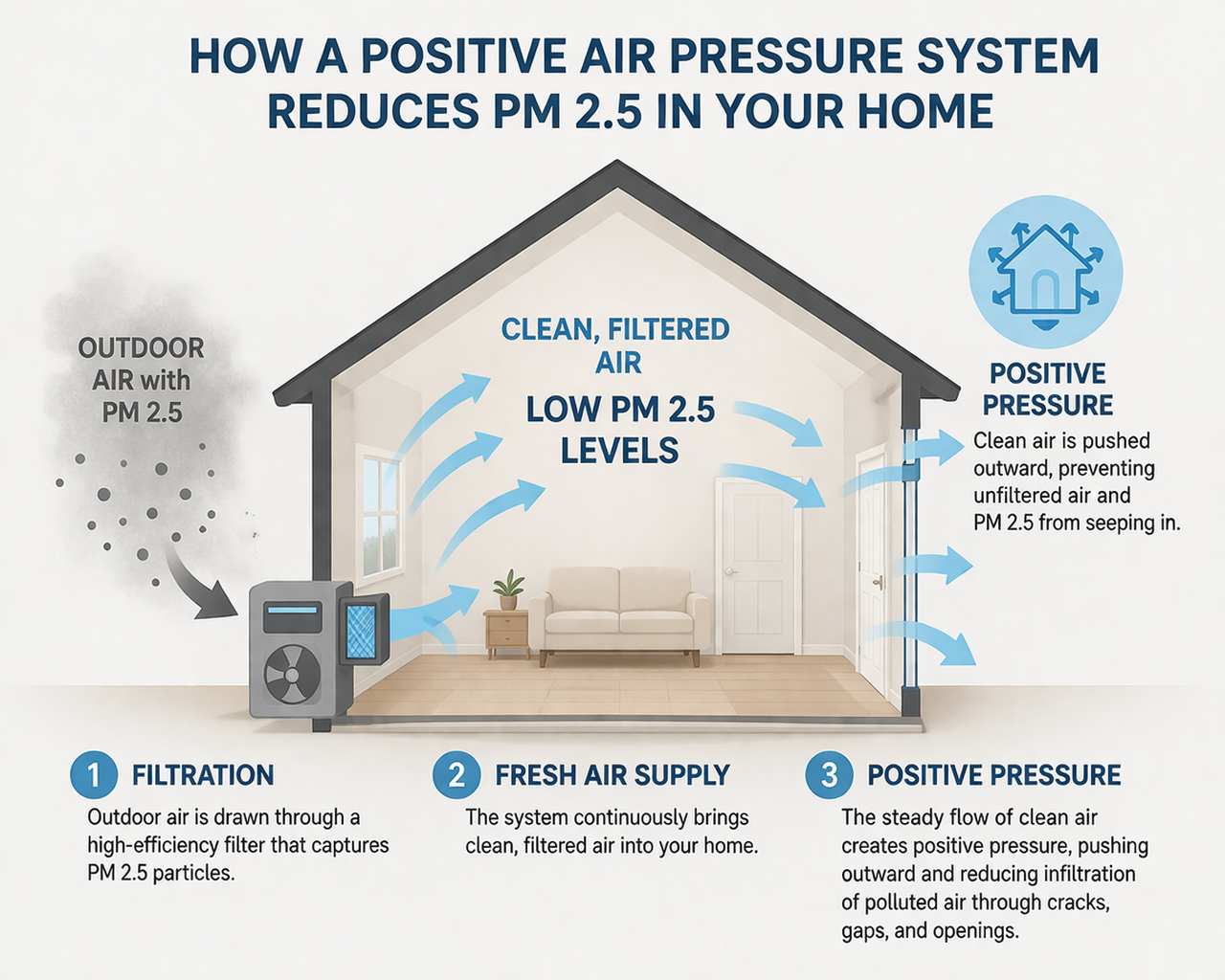
A positive pressure system (PPS) is one of the most effective ways to improve indoor air quality during smoke season.
Positive Pressure Systems: One of the Best Solutions
How it works:
- Pulls outside air through a HEPA filter
- Pushes clean air into your home
- Creates slight pressure that keeps polluted air from leaking in
Instead of constantly cleaning dirty indoor air, you’re helping stop it from entering in the first place.
Option 1: Professional Systems
For homeowners or long-term setups, a professionally installed system can include:
- Full ducting
- High-capacity fans
- Multi-stage filtration
These systems are more powerful and convenient, but can cost ฿100,000+.
Option 2: DIY Systems (What We’ve Seen Work Well)
We’ve personally had very good results with simple DIY positive pressure systems, especially for renters or budget-conscious households.
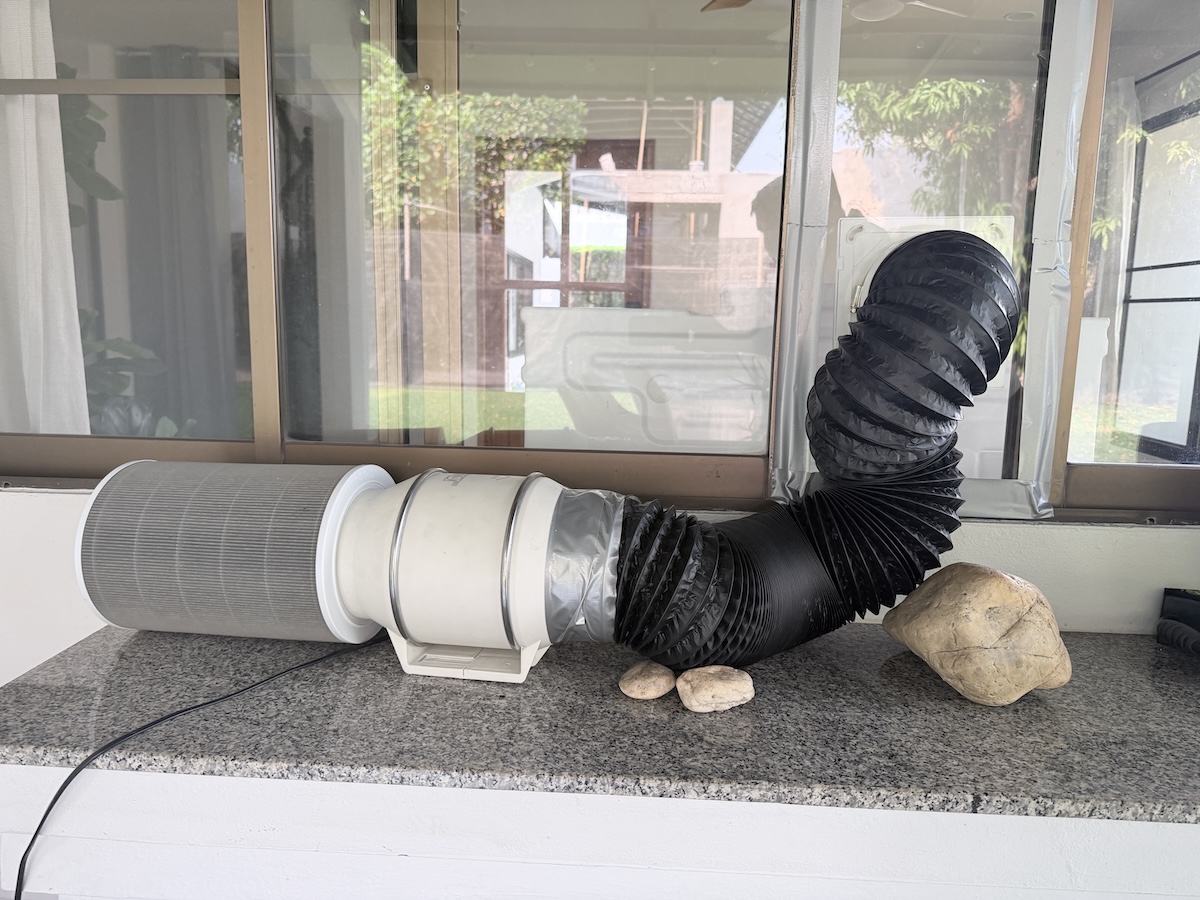
Typical DIY setup (฿2,500–3,000):
- Inline duct fan (4”–6”)
- HEPA filter + housing
- Flexible ducting through a window or wall
Parts are commonly available at stores like HomePro, Global House, or online.
What works best in practice:
- Install one system in the main living area
- Use portable air purifiers in bedrooms
With this setup, we’ve seen indoor PM2.5 levels stay around 10 or lower, even on very polluted days.
Contact our maintenance team to help with installation.
Here’s an example of a DIY positive pressure system setup.
Trade-Offs
- Your AC will work harder (since you’re bringing in hot outside air)
- DIY setups require basic installation
For many families, the improvement in air quality is well worth the extra utility costs. For more on utility costs read our article. Don’t Rent A House In Chiang Mai Without Knowing These 5 Utility Costs
Important Disclaimer
We are not air quality professionals or system installers — we’re simply sharing what has worked in our experience living in Chiang Mai.
- We are not responsible for installation, performance, or safety
- Results will vary depending on your home and setup
- If needed, consult a professional before installing any system
Final Thought
If you’re planning to rent or buy a home in Chiang Mai, it’s worth asking:
Can this home support a clean air setup?
Indoor air quality is quickly becoming one of the most important factors for comfortable living here.